
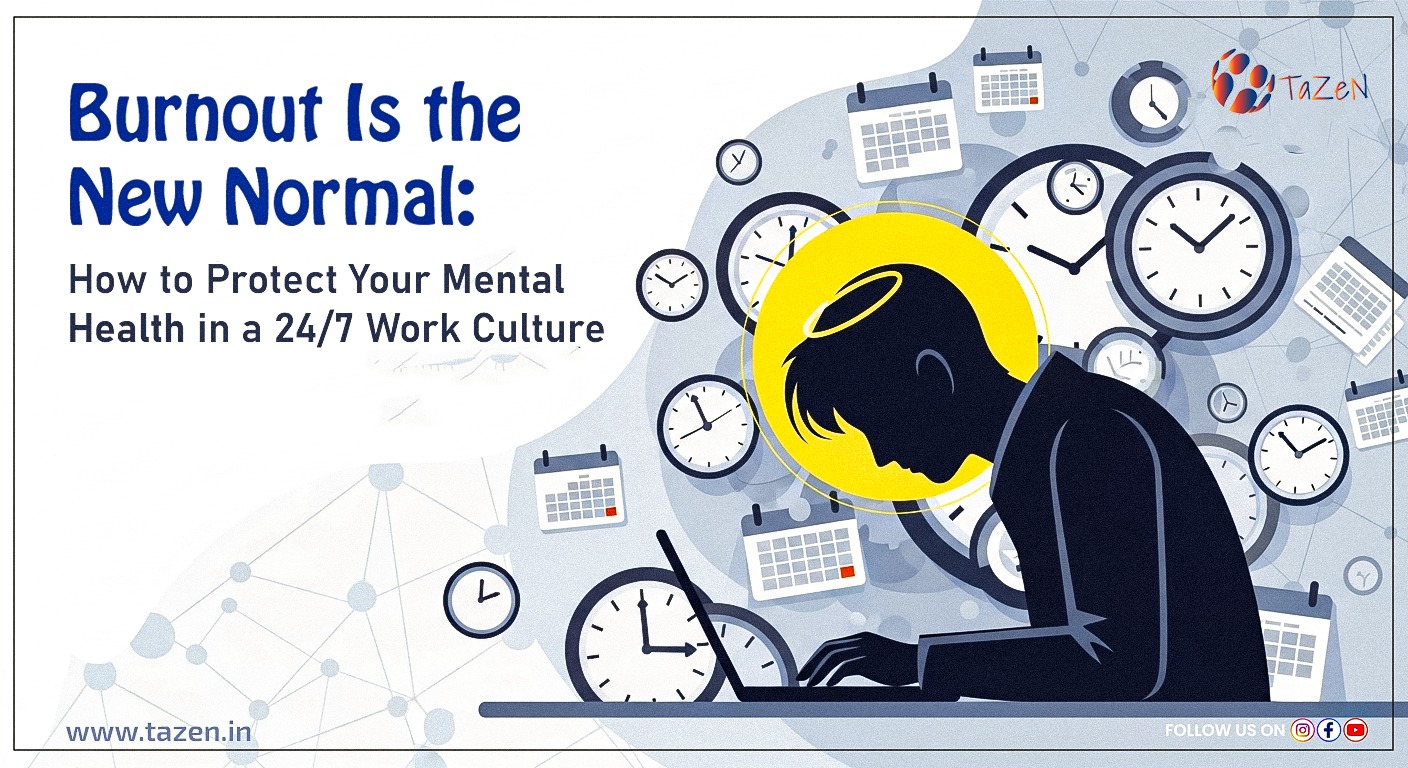
Burnout Is the New Normal: How to Protect Your Mental Health in a 24/7 Work Culture
We live in a time when work rarely stops. Smartphones, laptops, and online platforms have mixed up professional and personal life. Emails show up late at night, meetings extend into weekends, and being “available” feels like an unspoken rule. In this nonstop grind, burnout has quietly become the routine for many across different fields.
Burnout goes beyond just feeling tired after a long day. It is a deep state of emotional, mental, and physical exhaustion caused by ongoing stress. When burnout hits, even tasks you used to enjoy can seem overwhelming. You may find yourself feeling constantly drained, irritable, unfocused, emotionally numb, or detached from work and relationships. Over time, burnout can lead to anxiety, depression, sleep problems, and physical health issues like headaches, stomach troubles, and a weakened immune system.
One major reason burnout is so widespread is the always-on work culture. Remote work offers flexibility but can also stretch working hours. Social media praises hustle and productivity, making rest seem like laziness. Many workers feel they must prove their value by always being online and active. Unfortunately, this mindset takes a heavy toll on mental health.
Taking care of your mental well-being starts with awareness. Spotting early signs of burnout lets you act before stress becomes too much. If you feel constantly drained, emotionally exhausted, or disengaged from work, it's a signal that your mind and body need rest and balance. It's crucial to listen to these signs.
Setting healthy boundaries is one of the best ways to prevent burnout. Establishing clear work hours, avoiding work messages outside those times, and taking regular breaks can lower stress. Learning to say no to unreasonable demands and prioritizing tasks helps you regain control. Even small habits, like stepping away from screens, taking a short walk, or practicing deep breathing, can make a big difference.
Self-care is often seen as a luxury, but it is a necessity. Getting enough sleep, eating well, and staying active boost both mental and emotional strength. Simple practices like mindfulness, meditation, journaling, or enjoying quiet time alone help calm the mind and deal with daily stress. Allowing time for hobbies, creativity, and meaningful connections reminds you that life involves more than deadlines and tasks.
Equally important is finding support. Discussing stress openly with colleagues, friends, or family can ease feelings of isolation. Professional help from therapists or counselors offers guidance, coping strategies, and emotional clarity. Asking for help does not show weakness; it shows you prioritize your well-being.
While the 24/7 work culture may be tough to escape, burnout doesn’t have to control your life. Taking care of your mental health is a continuous commitment that demands balance, boundaries, and self-kindness. When you care for your mental well-being, you don’t just survive the hustle—you create a healthier, more sustainable path to success and fulfillment.
Comments