
Sustainable Interior Design Trends for Indian Homes
Sustainability is becoming a guiding principle in modern interior design across India. As homeowners confront rising energy costs and climate challenges, green solutions are gaining ground. Today’s Indian families want spaces that are not just beautiful, but also environmentally responsible. According to a Times of India report, eco-conscious décor – from carbon-conscious materials to toxin-free products – is reshaping interiors, making sustainability the “new luxury”timesofindia.indiatimes.com. In fact, over 60% of green-building projects in India now integrate sustainable interiorslineanddotstudio.com, reflecting a strong shift toward sustainable interior design in India. These trends matter for cost, health and the planet – so let’s explore the top eco-friendly home design trends and how they fit Indian homes.
Popular Eco-Friendly Design Trends
Indian homes are embracing several eco-friendly home design trends that blend style with low environmental impact. Key elements include:
- Reclaimed Wood and Green Materials: Furniture and flooring made from reclaimed or certified wood save trees and add natural warmth. Using salvaged teak or FSC-certified plywood gives character while reducing deforestationtimesofindia.indiatimes.comrmharchitects.in. Similarly, fast-renewable materials like bamboo, cork and jute are rising in popularityrmharchitects.in. Upcycled and vintage pieces are also in vogue; as Times of India notes, curated vintage décor (e.g. reclaimed marble counters or second-hand teak tables) adds “storytelling” charm without any wastetimesofindia.indiatimes.com. These choices support local artisans and lower transport emissions.
- Low-VOC Paints & Natural Finishes: Conventional paints and adhesives release volatile organic compounds (VOCs) that harm indoor air. Designers are switching to low-VOC or VOC-free paints, waxes and natural plasters. This helps trap fewer chemicals in the home, improving air quality. As one design guide explains, opting for low-VOC paints, formaldehyde-free plywood, and natural fabrics “create healthier indoor spaces”lineanddotstudio.com. For Indian homes, finishes like limewash, clay paints and natural wood stains are favored over synthetic lacquers.
- Maximizing Natural Light & Ventilation: Flooding interiors with daylight cuts electricity use and uplifts moods. Large windows, skylights and light tubes bring in ample sun, reducing the need for artificial lightinglineanddotstudio.com. Likewise, layouts that promote cross-ventilation – open floor plans, breezy courtyards, and high ceilings – help cool rooms naturally. As one expert observes, “we feel better and are more productive when we have access to natural light”worldgbc.org. In practice, designers may install reflective surfaces, thermal curtains and sunshades to enhance passive cooling and lighting, which can “cut energy bills” significantlytimesofindia.indiatimes.comworldgbc.org.
- Indoor Plants & Biophilic Design: Integrating greenery inside homes is a classic green interior design move. Plants like areca palms, snake plants or money plants not only beautify spaces but also filter air. Modern biophilic ideas – living walls, moss panels, or indoor herb gardens – actively improve air quality. Indeed, studies show nature-rich interiors boost well-being: offices with plants and sunlight report ~15% higher employee wellbeing and productivityworldgbc.org. Many Indian kitchens now sport potted herb gardens for fresh spices and cleaner air. Overall, the trend is to blur indoor-outdoor boundaries – think potted palms, bamboo blinds and natural fiber rugs that evoke India’s outdoors.
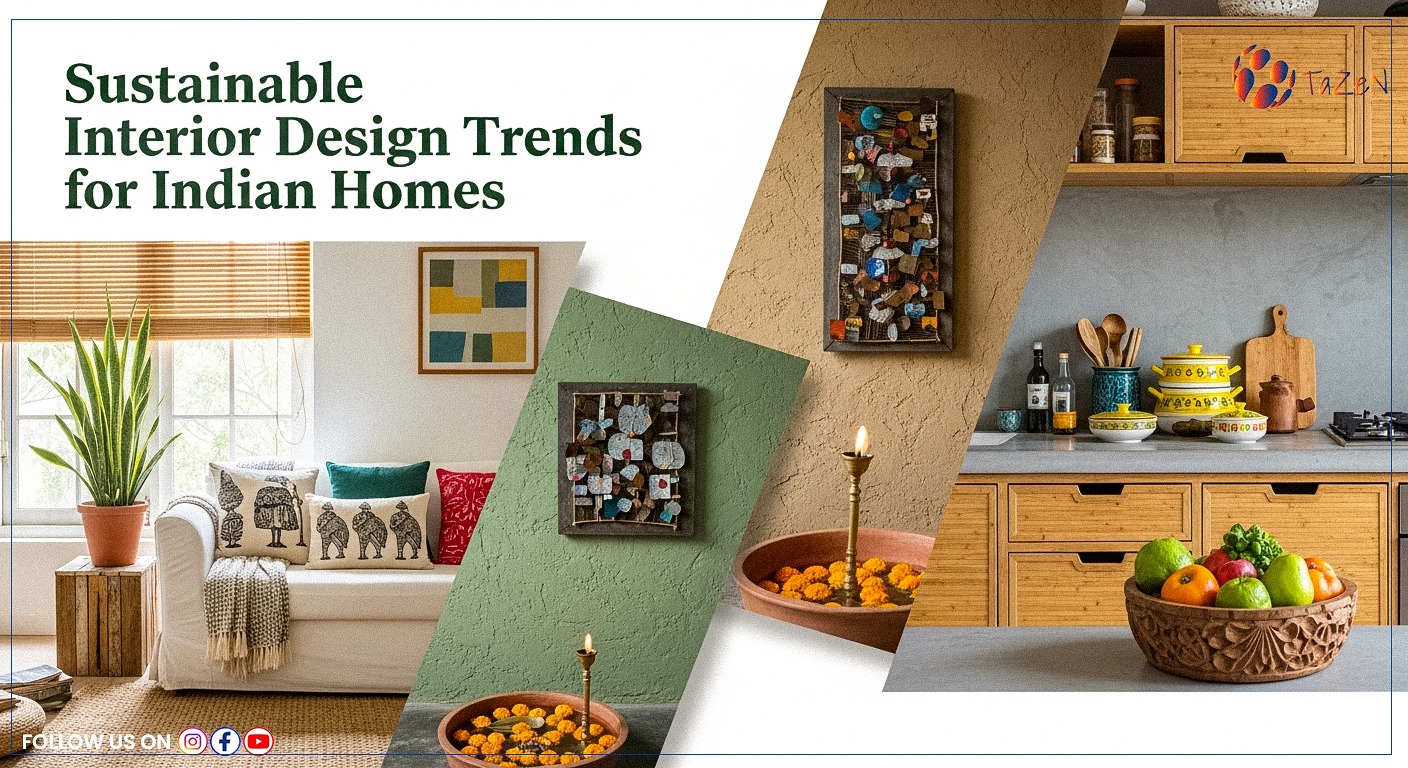
Houseplants, wooden decor and vintage pieces can all play a role in an eco-friendly room. Creative designers mix natural elements – like dried pampas grass, jute accessories or repurposed art – to give each room warmth and character. For example, a home office might feature a repurposed teak table and shelves adorned with leafy ferns and fernstimesofindia.indiatimes.comworldgbc.org. Such choices not only reduce waste, but also connect the space to India’s craft traditions (for instance, using handwoven textiles or antique pottery as décor).
Creating an indoor garden is another trend. Kitchens and living rooms increasingly include herb walls or clustered potted plants to boost oxygen and filter pollutants. Herbs like mint, thyme and basil thrive on a sunny windowsill, bringing both freshness and utility to the home (and a pop of green!). Even small plants on shelves or hanging planters can lift mood and humidity. These biophilic touches – green accents on walls, planters made from recycled wood, or jute planters – make interiors healthier and cozier.
Sustainable Design in Indian Context: Climate, Culture & Budget
In India’s climate and culture, many sustainable solutions are also very practical. For example, traditional features like courtyards, verandas and jaali screens promote natural airflow and light, exactly what modern eco-designs achieve with high-tech solutionsrmharchitects.in. Thick walls, high ceilings and shaded windows (hallmarks of old Indian homes) naturally keep interiors cool in summerrmharchitects.in. Materials familiar to Indian homes – terracotta tiles, cotton and jute textiles, local hardwoods – are climate-resilient and inexpensive compared to imported syntheticsrmharchitects.inrmharchitects.in. Supporting these vernacular elements also preserves cultural identity: handwoven khadi curtains or khat ceilings double as art and sustainable insulation.
Budget-conscious homeowners find that going green can pay off quickly. Using reclaimed doors or furniture often costs less than buying new pieces, and durable natural materials (like stone or bamboo) last longer with minimal maintenance. Energy-efficient appliances and LED lights cut monthly bills substantiallylineanddotstudio.comworldgbc.org. Water-saving fixtures and rainwater harvesting also ease utility costs. Many green measures have government incentives too – for instance, solar rooftops or efficient stoves often qualify for subsidies. By blending modern eco-tech (like solar panels and smart lighting) with familiar elements (like courtyard gardens or handcrafted decor), sustainable interiors become both budget-friendly and culturally rich in Indiarmharchitects.inrmharchitects.in.
Benefits of Eco-Friendly Interiors
Adopting green home interiors India techniques offers clear benefits:
- Lower Utility Costs: Energy-efficient lights, insulation and appliances can cut electricity use by 20–30%. Likewise, water-saving fixtures and recycling systems may halve water bills. (The World Green Building Council reports green homes achieve up to 30% energy savings and 50% water savingsworldgbc.org.)
- Improved Health & Comfort: Natural light, fresh airflow and plants mean better indoor air quality. Low-VOC paints and non-toxic materials reduce allergens and chemicals, protecting family healthlineanddotstudio.com. Residents often feel more relaxed and alert in daylight-filled, plant-rich spacesworldgbc.orgworldgbc.org.
- Positive Environmental Impact: Every sustainable choice – from recycled wood flooring to solar panels – shrinks your home’s carbon footprint. Less waste goes to landfills when you upcycle or choose durable items, and conserving energy helps fight climate change. Many Indians also feel a moral reward from “giving back” by living lightly.
- Support for Local Economies: Buying locally-made furniture, fabrics and crafts keeps money in the community and cuts emissions from transport. It also revives traditional skills, making your décor authentically Indian.
Together, these benefits show that sustainable interior design in India is both smart and satisfying. As WorldGBC notes, green-certified buildings not only save resources but also enhance occupants’ well-beingworldgbc.org. In short, eco-conscious homes pay for themselves in quality of life as much as in rupees.
Conclusion: Work with Verified Designers
Sustainable interior design is more than a trend – it’s a way to future-proof your home. By embracing reclaimed materials, clean finishes, natural light and plants, Indian homeowners can create spaces that honor tradition and planet. To make this transformation seamless, it helps to consult experts. Verified professional designers know how to blend eco-friendly home design trends with local aesthetics and budgets. Consider exploring Best Online Professional Interior Designers in India on Tazen’s platform, which connects you to vetted designers who specialize in green interiors. With the right guidance, your home can be stylish and sustainable – saving money, improving health, and offering a beautiful, resilient sanctuary for your familytimesofindia.indiatimes.comlineanddotstudio.com.
Sources: Reputable design and sustainability publications (e.g. Times of India, IGBC data, World Green Building Council, industry blogs) informed this guidetimesofindia.indiatimes.comlineanddotstudio.comworldgbc.orgworldgbc.org. They highlight the latest trends and benefits of eco-friendly interiors, especially for India’s climate and culture.
Comments